Don Carnal's topography

[Don Carnal] fled the church and went into the Jewry,
they received him gladly in their carniceria;
the Passover of unleavened bread was drawing near;
they liked being with him, and he found the day good.
Very early on Monday, Don Rabbi Acebín,
to help him out, lent him his nag;
he was soon at the border of Medellín;
the lambs cried: "Baa! This is the end!";
the goats and kids, the rams and ewes
bleated loudly, saying these words:
"If Don Carnal takes us from here into town,
There's a lot of us who will end up skinned."
The meads of Medellín, Cáceres, and Trujillo,
the Vera de Plasencia as far as Valdemorillo,
and all of La Serena, that quick young fellow
ravaged in a rush and pillaged at will;
the country of Alcudia and all of Calatrava,
the country of Hazálvaro, and Valsaín he entered,
in just three days he did it: he seemed to fly;
the rabbi's nag was so scared it ran amok.
When the bulls saw him, their necks bristled,
the oxen and cows clanged their bells,
and the calves and young bulls bellowed loudly:
"Hey! You cowherds, save us with your dogs!"
(El libro de buen amor by Juan Ruiz, arcipreste de Hita (first version 1330, revised version 1343), stanzas 1183 - 1188)
*
Forty-five years on my bookshelf without ever being opened -- that's enough, I said to myself, tossing El libro de buen amor onto the heap destined for charity shops in Bath.
But then I opened it at random, and my eye fell on the name Plasencia, a town in N. Extremadura that I happen to know. So I was drawn in.
This extract comes from a section describing the allegorical battle between Don Carnal (his name really says it all) and Doña Cuaresma (the Lady of Lent). It seems to have been a traditional theme in medieval Europe, since there also exists a French poem on the subject, but there's no literary influence either way.
Here Don Carnal, in his gluttonous pursuit of meat of all kinds (all organic, too!), visits the rich livestock areas in the back country of Extremadura and the Castiles.
Medellín, Cáceres, and Trujillo : in Extremadura. Trujillo is to the east of Cáceres, and Medellín is south of Trujillo on the river Guadiana.
the Vera de Plasencia : in N. Extremadura, now known simply as La Vera. A lowland area to the east of Plasencia, beneath the Sierra de Gredos.
as far as Valdemorillo : Valdemorillo is just to the west of Madrid. (But at that time Madrid was still quite a small town, vying for local supremacy with Segovia.)
La Serena : An area to the east of Medellín, celebrated for its wool and sheep's-milk cheeses.
The country of Alcudia and all of Calatrava: the Valle de Alcudia and the Campo de Calatrava are areas to the east of La Serena, to the south of Toledo and close to Ciudad Real (but this was a new town and still very small). Both these areas served the military/monastic Orden de Calatrava.
the country of Hazálvaro, and Valsaín he entered : Hazálvaro or Campo Zálvaro is the livestock country between Ávila and El Espinar (south of Segovia). Valsaín is south-east of Segovia, at the foot of a valley of the Sierra de Guadarrama.
*
The Spanish text of the extract is given below, in three versions. 1: from the online text at Biblioteca Cervantes, reproducing a 1911 (?) edition in the series Biblioteca económica de clásicos castellanos published by Louis-Michaud (Paris). It's apparently based on MS S (Salamanca). 2: from the 1971 Editorial Bruguera edition (Joaquín Rafel Fontanals and Lidia Pons Griera), based mostly on MS G (Gayoso) with the missing parts supplied from MS T (Toledo) and MS S (Salamanca). 3: translation into modern Spanish from the same edition.
(You can also download a PDF of Chiarini's 1964 edition, which gives a different text again.)
1183
Fuyó de la iglesia, fuese a la jodería,
resçebiéronlo muy bien en su carneçería,
pascua de pan çençeño éstos los venía,
plogó a ellos con él, e él vido buen día.
Fuxo de la iglesia e fuese a la Judería,
rescibiéronle bien en su carnicería
pascua de pan cenceño entonces les venía;
a ellos con él plugo e él vido buen día.
Huyó de la iglesia y se fue a la Judería,
le recibieron bien en su carnicería;
la Pascua del pan ácimo entonces las venía;
les gustó estar con él y él halló el buen día.
1184
Luego lunes de mañana don Rabí Açelín
por le poner salvo emprestole su rosín,
púsose muy privado en estremo de Medellín,
dixieron los corderos: «Vedes aquí la fin.»
Luego lunes mañana, don Rabí Acebín,
por le poner en salvo, prestóle el su rocín;
passóse muy aína en estremo de Medellín;
dixieron los corderos: «¡Be! ¡He aquí la fin!»
El lunes muy temprano, don Rabí Acebín,
para ponerlo a salvo, le prestó su rocín;
estuvo muy pronto al extremo de Medellín;
dijeron los corderos: «¡Be! ¡he aqui el fin!»;
1185
Cabrones e cabritos, carneros e ovejas,
davan grandes balidos, disen estas consejas:
«Si nos lieva de aquí Carnal por las callejas,
»a muchos de nosotros tirará las pellejas.»
cabrones e cabritos, carneros e ovejas
davan grandes valados, dizen estas consejas:
«Si nos lieva de aquí Carnal por las callejas,
a muchos de nosotros tirará las pellejas.»
cabrones y cabritos, carneros y ovejas
daban grandes balidos, dicen estas palabras:
«Si Carnal se nos lleva de aquí a los poblados,
a muchos de nosotros nos quitará las pellejas.»
1186
Plados de Medellín, de Cáceres, de Troxillo,
la Vera de Plasençia fasta Valdemorillo,
en toda la Serena, el presto mançebillo
alboroçó ayna, fiso muy grand portillo.
Prados de Medellín, de Canceres, de Troxiello,
la Bera de Plazencia fasta Valdemoriello,
e toda la Serena, el presto mancebiello
alboroçó aína e fizo grand portiello;
Prados de Medellín, de Cáceres, de Trujillo,
la Vera de Plasencia hasta Valdemorillo,
y toda la Serena, el ligero muchachito
alborotó de prisa y saqueó mucho;
1187
El campo de Alcudia e toda Calatrava,
el campo de Fasalvaro, en Basaín entrava,
en tres días los anduvo, semeja que volava,
el rosín del rabí con miedo bien andava.
el campo de Alcudia e toda Calatrava,
el campo de Hazálvaro, en Valsavín entrava,
en tres días lo anda: semeja que bolava;
el rocín del rabí con miedo bien andava.
el campo de Alcudia y toda Calatrava,
el campo de Hazálvaro, en Valsaín entraba,
en tres días lo recorre: parece que volaba;
el rocin del rabí con el miedo mucho andaba.
1188
Desque l' vieron los toros, irisaron los çerros,
los bueyes e vacas repican los çençerros:
dan grandes apellidos terneras et beçerros,
«¡Aba aba, pastores, acorrednos con los perros!»
Desde l' vieron los toros, enerizan los cerros,
los bueïs e las vacas repican los cencerros,
davan grandes bramidos terneros e bezerros:
«¡Ab'aba!, vaquerizos, ¡acorretnos con los perros!»
Cuando lo vieron los toros, erizaron los cerros,
los bueyes y las vacas repican los cencerros,
daban grandes bramidos los terneros y becerros:
«¡Ea! vaquerizos, ¡socorrednos con los perros!»
*
 |
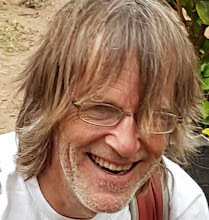
| In the park at Plasencia, September 2023. |
 |
| Back on my bookshelf.... |
Labels: Juan Ruiz (Arcipreste de Hita), Specimens of the literature of Spain
Permalink posted by Michael Peverett @ 10:35 pm
0 comments




0 Comments:
Post a Comment
<< Home