Saturday, November 07, 2020

yellow barges in pushing away sense

. . .


to match an eyebrow
wilted flower code
assault upon language
both sides of a coin

yellow and black
false dilemma on an empty train
images faster than an eye
palm trees in a row of sorrow

no one speaks
of bark of sunlight
a man whimpers at the clouds
somewhere a young girl

plastic flowers in a pink bedroom
my back crooked from watching
yellow barges in pushing away sense
in a portable landscape

stars trapped in nets
dire thrown carelessly
diced food
dark web of buildings

in a summer heat of reason
split open like a moving variegated shadow
across a black canvas
are pink lines

weblike forest
yellowed lips of sense
against a moving
target of glitter trees

thoughts leftover
soundless atmosphere
slow move away from fading language
to which i pin my hope

great blur of reason
new versions of radiant forests
at the deaf of feeling
a hundred views of 富士山

outdated throng of tired listening
dissolve into grey pools of regret
yellow objects in my mind
not this heavy lifting of concrete

. . .


*


The distinctive features of the music slowly come into focus. For instance, the colour words. The nouns, which usually toll the end of the lines. The big abstract nouns: reason, language, sense, feeling, mind. (Is "mind" an abstract noun? . . .) . The emotional words. The metaphors. 

So it's poetry that is quite overt about its constructed nature. Yet it moves and means. 


*


dire thrown carelessly : Maybe that's meant to say "dice thrown carelessly". It suggests it anyway. 

富士山 = Mount Fuji

[Figuring out how I was going to reproduce this, I discovered that Google Translate has a handwriting option, so I didn't need to learn how to use a Japanese keyboard: with care and patience you can make a drawing of each character, retrieve a copy-and-paste-able Japanese character, and at the same time learn its approximate equivalent in English. 

Just for the record, the following characters show up later on in the extract:

川     river

森木林石水火雲霧     forest tree forest stone water fire cloud fog  ]


*


A modern landscape. There's hardly any human physical activity but there's plenty of movement. It's a "portable landscape"; sometimes the thing that appears to move is what stands still, and vice versa. So which is the moving target? 

Meanwhile, what to make of the recurrent hints of haikuesque tranquillity? The clouds, the canals, the wet trees. . .

A glimpsed tranquillity here in this modern poem, mocked by the ersatz flowers, and paradoxically co-existing with the un-haikuesque abstract nouns and metaphors: yet glimpsed all the same. 

But what is the meaning of tranquillity now? Is it merely too late for a human to act? 

And other things are here too. The barely contained emotions, they are spilling out. (It's not only the palm trees in that "row of sorrow".) And the exhaustion of "pushing away", "fading", "tired".


*


So my slow dawdle through the poetry anthology women: poetry: migration (2017) has in due course brought me to the poetry of the editor herself, Jane Joritz-Nakagawa (born in Harvey, Illinois; she has lived in Japan since 1989). It's an extract from <<terrain grammar>>, a collection published by the same publisher (theenk Books) in 2018. (Her ninth collection, or thereabouts.)


The extract looks like a single flow of carefully considered quatrains (about three times longer than the bit I quoted).  Apparently it consists of several poems (and thus my sub-quotation might inadvertently cross a poem boundary). The blurring of poem boundaries is maintained throughout the collection, according to this helpful review by Brianna Vincent:

https://plumwoodmountain.com/brianna-vincent-reviews-terrain-grammar-by-jane-joritz-nakagawa/


Jacket of <<terrain grammar>> (theenk Books, 2018)

[Image source: https://www.walmart.com/ip/Terrain-Grammar-Paperback-9780988389199/351386092 .]


Not all of <<terrain grammar>> has the quatrain format. Here's a taster from another section, which appeared in Cordite Review:


and thus die toward/of a language. as it may [have been]. turning (in that
direction). whirling verb (of) personage.  not grasped (to). in

search of [nautical roughage like as]. to displace (to). at refuse (of)
historical bending past. expands breadth toward/beyond

urchin of noun objects. forgetting of it now. (a) breach of always.


http://cordite.org.au/poetry/theend/from-terrain-grammar/)


Some extracts from a wide-ranging and lucid interview conversation with Thomas Fink:


I see FLUX in large part as a book of characters trying to navigate difficult things (economic personal and sociopolitical uncertainty and trauma, untrustworthy organizations, natural disasters, etc.). Whereas FLUX is perhaps primarily about “the material world” Distant Landscapes is a more personal book about a character who is similar to me living in a forest versus the larger cityscapes and more numerous types you find in FLUX, both urbanscapes and mental landscapes which emphasize a kind of escape or wish to transcend the world. Both books dispensed with poem titles and are weavings of disparate elements that I try to make harmonize / cooperate with each other; there is a fair amount of formal and stylistic and tonal diversity etc. But Distant Landscapes is I think a quieter or more introspective and more nature-oriented book and is much more me or the me that was writing the book, a character very close to myself (my actual self v. a social self). After FLUX I wrote a chapbook titled wildblacklake and Distant Landscapes continued some of what I was experimenting with in that chapbook, a kind of minimalism that owes much to haikuesque poetics, much moreso than FLUX does.


          . . .


Yes, language including my own writing of course is imperfect, as far as trying to capture the world and one’s thoughts and feelings about it in words so that generates the next poem, or thought in language (sometimes gestures seem to work better or music, etc.) where one tries again but only succeeding at best partially:-), an ongoing process that needs to be repeated! As you said the alphabet (or other orthography) can’t help us “merge” with the natural world, a desire some of us including myself often has, or at least it doesn’t work for me that way. Especially for me as far as “thought” (v. “feeling”) poetry is closer to me, more “real” or “truth-full” than “linear” prose which tends to feel much more artificial and divorced from my actual “thinking”. But even so, there is some lack, a kind of grasping/gasping/gaping…gaps! The “music” of poetry is important because it helps make up for some of the lack, but the lack continues….


          . . .


It’s not a secret that I have an ecofeminist perspective. Ecofeminism often links together destruction of the environment with patriarchy, masculinities theory, racism, ableism, animal rights etc., as I do. If it matters I am also the survivor of physical assault. This does not make me special, there are many such women in the world. Rape occurs in numerous of my works, both the attempted rapes I experienced as well as the actual rapes of friends and acquaintances or rapes I have heard about in the news. Sex occurs because sex occurs. Environment appears because I care about it. Anything that takes a poet’s attention can be in a poem.


https://dichtungyammer.wordpress.com/2016/10/30/exchange-on-jane-joritz-nakagawas-recent-poetry/


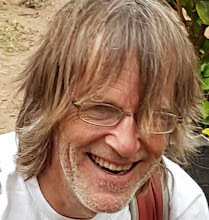
Jane Joritz-Nakagawa in 2018


[Image source: https://isobarpress.com/authors/jane-joritz-nakagawa/ .]


Some other poems by Jane Joritz-Nakagawa: 

"Buildings fall              (2003)
Sonnet A                       (2008)
Ode 8                            (2008)
Dear Diary                    (2008)
methane dress               (2017)
http://cordite.org.au/poetry/confession/methane-dress/


<<terrain grammar>> was followed by the long poem Plan B Audio, published earlier this year (2020). It's about the author's experience of disability, life-threatening illness and radical surgery.
Here are some extracts:
Here's a review by Ian Brinton in Tears in the Fence:


Labels: ,

Monday, April 30, 2018

More extracts from Women: Poetry: Migration


[Image source: https://deante.pl/pl/MATEX-Swidnica]


Six more capsule extracts from the anthology Women: Poetry: Migration, ed. Jane Joritz-Nakagawa (theenk Books, 2017).  Transcribing the extracts below (I'm following the book's alphabetical sequence), I was struck anew by the remarkable variety of ways in which language can be laid out and can release meaning; the variety of voices and emotions; of concept and ornament.


Previous posts about this anthology:
http://michaelpeverett.blogspot.co.uk/2018/03/my-latest-book-purchase-arrived.html
http://michaelpeverett.blogspot.co.uk/2018/04/this-name-is-like-dyed-wool-of-living.html


ANIA WALWICZ


........I hold a mouse a white mouse it tells me where the grey cat is where ferdyduke is where everything is now and will be and was and is all time collides with me in the cinema kino now nova in faraday street and lygon street in melbourne dark town of my dreams in winter a picture in 1920 before me and after me little people cross roads and cross roads their picture in old photos and black and white colour now postcards of swidnica bank and park with lake a lake with bridge that I don't remember at all but it is here and was there and the postcard of the prussian city with same lake .......


(from "earth")


ANNE TARDOS


Glick-glick armature en voiture shano-glick.
Elképzelhetetlen problems and sentiments.
Arachnid juicy-fruit Klebestoff.
Only the self can know.
Ötvenen got on the bandwagon


Volga.


(from UXUDU)


 BARBARA BECK


absolutely ragged
viridian sap emeraude spinach mantis Hooker's
               jungle
               (hue close to evergreen
                                   as to be almost black)
watches her language
                           for recapitulation
               straight line never to return the low
                           wedgings (in the narrows of size and time)  ......


(from "edge conditions")


BELLA LI


.... The first law of desire is, always, to remain still. The first law is always lost in motion, replicating blindly and without cease. The story begins in 1956, in a small town in the province of Buenos Aires. But in the sixteenth century there are reports of bodies moving silent through the trees; impervious to frost, immune to disease. They meet by chance, without voice. Desire remains, when understood finally, completely, a compulsion to be still. In the forest they killed them like sparrows -- running, hooded.


(from "The Memory Machine of Elena Obieta")


CARRIE ETTER


A body, prostrate    above the duvet, its teal floral


the street's whir of tires, clank of a truck and rumble


which is to say, a species of silence    sound become peripheral,
                                              aloof


The windows closing out, closing in    October or November's
                                             crisp


The body still, eyes, open    a soundless, resounding no


(from Grief's Alphabet)


CECILIA VICUÑA


...


Una vocal, quién es?
Formándose en voz perdiente de son, un sonido rajar, esperanar ...
Un resequido en pleno en tu paladar
El paga la luz con temblando en solar, Estaba por ser ... antes de ser al alma intacta ensotea empalada Incitada y bordear ...
La voz de un vocal durmiendo en pasando .... silvando, tornando.. en pasar, llamándolo estoy la voz en durmiente  .......


(from "para ir al pasado elevar el atrás (chant)")


[AW: born in Poland, lives in Australia. AT: born in France, lives in USA. BB: born in Germany, lives in France. BL: born in China, lives in Australia. CE: Born in USA, lives in UK. CV: Born in Chile, lives in USA. ]


Labels: , , , , , , ,

Thursday, March 15, 2018

there are no foreigners


My latest book purchase arrived yesterday: Women: Poetry: Migration [An Anthology] ed. Jane Joritz-Nakagawa (theenk Books, 2017).  It's an anthology of contemporary (mostly experimental) poetry by women who live in a country different from the country of their birth. That might sound a complicated and even pointless criterion but (on the basis of barely an hour's reading)  the result is a book that is very easy to like, its swirlingly various poetic contents feeling a little more approachable because of the framework of converging preoccupations. (The miniature "essays" from each of the contributors are helpful too.) 


Here's a few words from the early pages.

*

From Jane Joritz-Nakagawa's Introduction:


... in Strangers to Ourselves (1991), Julia Kristeva wrote of "Our [human] disturbing otherness" but stated: "by recognizing our uncanny strangeness we shall neither suffer from it nor enjoy it from the outside. The foreigner is within me, hence we are all foreigners. If I am a foreigner, there are no foreigners" (p. 192). As a poet attempting to write an introduction to a poetry anthology of migrant women's work, I am also thinking of language itself as foreign. Japanese poet Kora Rumiko said in an interview that she "... felt even as a child that language was not mine, that I existed outside the language that surrounded me, like a foreigner.... " Here she is discussing her first language, Japanese, not a second or third one.


*

From Adeena Karasick's Salomé: Woman of Valor


And what shadowed abyss
of taut turns is riddled by the flux
          of campy anon

And what breathy mambo
of moaning nomads
is frothing in the foolscape of
your wet roulette?
What sluiced verity
What twangy biases
What cooing lurks in the sashay of racy traces


*

 From Amanda Ngoho Reavey's Marilyn


In the jungle there is a foreboding that surrounds a sentence. It lactates. It drowns.


They say that by the time a child is one year old her brain has been wired to know and understand only the phonemes of the language that surrounds her.


I spent eight years in speech therapy learning how English letters and words should be formed in my mouth...


*

From Andrea Brady's The Blue Split Compartments


This is the kill box, frozen into sculpture
at a value of some $10m.
And who hover over it are tempted to wonder

where the 'art' went or where the 'work' went
looking for their circus face in the bottom,
or the secret of its underside, where it makes contact
with the gallery floor,
but it says nothing other than 'construction'. It really is
like swatting flies; we can do it forever
easily and you feel nothing.


*

[JJ-N: born in USA, lives in Japan. AK: born in Canada, of Russian-Jewish heritage; lives in USA. ANR: born in Philippines, lives in USA. AB: born in USA, lives in UK.]


The jacket artwork is by Steven Seidenberg, photographer painter and poet. http://www.stevenseidenberg.com/


Labels: , , , , ,

Powered by Blogger