winter pasture land

In the winter pasture land
around Lady Day
Dalsvallen has woken up
in house sparrow grey
coffee at Karl Gustav's
snow scooter chugging
after the second tug
over Valma
like holes torn
in the winter covering
approaching black billows
as from the underworld
dog-leashes hard stretched
backward glance from Härje
up to Ortkammen
the hoof holes
half filled with drift snow
sudden round stealthy prints
known but not welcome
off to the pines
with blood red throat
the calf of last year
the lynx took in one jump
motor throttled
one quiet minute
were you just thirsty
or did you kill
for the old raven
down towards Råndalen
draw the snow squalls
in a dream-like crane dance
while the cow turns her nose
towards the land of calving
A poem by Bo Lundmark,"I vinterbeteslandet", translated by me from Den sjunde dagen: dikter från glesbygden (1992). A slightly different version of this poem, titled "Vårfrudagstid", is available online: https://www.tidningenharjedalen.se/artikel/dikt-varfrudagstid
The "winter pasture land" is the wooded lowland area where the reindeer spend the winter, surviving by hoofing up reindeer lichen from under the snow.
Lady Day (Vårfrudag) = 25 March
The reindeer return to the fells in late spring, there to calve and spend the summer living off the upland vegetation. (There are a lot less biting insects up there too.)
In this case the winter pasture land is in the county of Härjedalen, in the valley of the Ljusnan and its tributaries. When the reindeer cow turns her nose, she'll be looking north-west to the mountains of Sånfjället and beyond, perhaps up towards Funäsdalen where Bo Lundmark himself lives.
Härjedalen, an inland county of mostly high ground, with a famously low population, is one of the coldest places you can winter in Sweden. (The temperature is actually even colder in the valleys than on the mountains.)
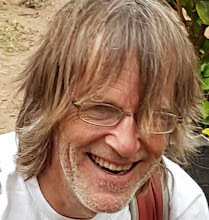
Bo Lundmark, born in 1944 in Tärnaby, was until his retirement a priest in the mountain areas of Sweden, also a poet and historian of Sami life. Here's an interview (in Swedish) that gives more background: https://www.op.se/artikel/bland-herdarna-uppe-pa-berget . Latterly he was priest for the parishes of Tännäs and Ljusnedal in Härjedalen, where this poem is set.
Permalink posted by Michael Peverett @ 10:59 am
0 comments