In Pride and Prejudice, Mr Collins proposes to his cousin Elizabeth Bennet and, of course, she turns him down. Collins, however, doesn't seem to understand the refusal, suggests that young ladies say No when they mean Yes, and ponders aloud: "perhaps you have even now said as much to encourage my suit as would be consistent with the true delicacy of the female character".
Collins is ridiculous, complacent, and utterly lacking in sensibility. But still, his difficulty is genuine. Since he possesses a theory that would fully account for why Elizabeth might refuse his proposal while still intending to marry him, in what sense should he understand her?
A bad situation, this lack of trust in a person's words, and it can lead to worse things than an unduly prolonged proposal.
Collins might have been helped if he had had a little insight into body language and other non-linguistic clues, but that was what not many men of his time did have. Indeed, the question of whether a woman liked a man was deliberately censored from thought. as being indelicate towards the woman as well as uncomfortable for the man to contemplate seriously.
But everyone, not just Mr Collins, is stupid and blind in some respects and to some degree. Collins' difficulty is our difficulty.
What if you believe in despite of the words, or (most likely) you don't know what to believe?
There's no safe advice. You cannot say, for instance: If in doubt, abide by the words.
And the principle No-one ever got sacked for choosing IBM just doesn't apply when it comes to human relationships.
Cue for another Claes Andersson poem!
*
Nowadays I don't trust you any more
than I always trusted myself
As soon as I turn my back you deceive me
And right you are
I would do the same if I were I
Someways I'm not me anymore
I get extended bouts of faithfulness and caring
It's some kind of revenge
Now when there's nothing more to massacre
we could have it fairly good together, you and I
But you! You don't mean a word of what I say!
Go to hell but come back
(Trans. Lennart and Sonja Bruce, in Poems in Our Absence, Bonne Chance Press 1994)
*
Recent dramatizations of this scene have wanted to emphasize the force and conviction of Elizabeth's refusal. Collins' maddening refusal to understand her (in the novel) has tended to be underemphasized.
Jennifer Ehle and David Bamber (1995)
Keira Knightley and Tom Hollander (2005)
Recommended: An edit that combines the above two renderings along with the same scene from the 1940 film featuring Melville Cooper as Collins and Greer Garson as Elizabeth Bennet
How could I forget about Claes Andersson? But so it is. I haven't read his poems for ten or fifteen years, and yesterday the forgotten book (translations by Lennart and Sonia Bruce) comes off my bookshelf, falls open, and I begin reading, and I remember how strongly and passionately I love this poetry that I had nevertheless forgotten all about. Wasn't there, though, a perceptible if undiagnosed emptiness in the years between? Or am I misremembering it all, and the truth is I love Andersson's poems much more today than I ever did before? Has love opened up in me that I express it so, or is there something histrionic about all this, has love in fact narrowed -- whereas, back then, I inhabited a whole world of love, I didn't need to make such a noise about it?
Have sat at meetings, ticked off items on the agenda, recommended,
turned down
Approved the minutes (change "should" in §123 to "ought")
Gone to movies, museums, bars, libraries, homes, deserts, caves
Shoveled snow, played with the children, screamed at the children
been bitten by dogs
Traveled in Europe, the States, Africa, met people
Bought and sold junk and cars, waited for buses, trains, have biked
Given speeches, lectures, been dumbstruck, signed petitions, demonstrated
Read (tons of) books, papers, brochures, hares' and crows' tracks
in the snow
Stared at TV, drunk beer, wine, schnapps, kefir, tasted sperm
Awakened in my own bed, in another's, up to now have always awakened
Dozed off over books, steering wheels, bottles, women, in buses,
closets, on guard duty
Put on pounds, lost them, exercised, lifted weights, brides over
thresholds, odds and ends
Been disappointed, happy, angry, indifferent, enraged, in love,
indifferent, empty
Been to funerals, weddings, soccer games, visiting, to crayfish
dinners, outhouses
Witnessed deliveries, death throes, christenings, autopsies, orgies
Written plays, traced hearts in the snow, poems, demand notes,
prescriptions, crib sheets
Shot rifles, pistols, water guns, mortars, slingshots, blowpipes
Had the mumps, the shakes, anxiety, depression, paranoia, inflamed urethra
Fought with conservatives, radicals, myself, Finns, windmills, my wife
Rented rooms, laundry rooms, apartments, tuxedos, cars, bought
houses, potted plants
Been plagued by guilt, small children, nightmares, red-headed lovers
Have asked the meaning of it all
Brooded, deliberated, pondered, constructed, conceived, stopped
thinking
Found the questions irrelevant and answered with the answer of
the senses
Brussels is famous for its sunny weather and
its waste disposal.
My potency and my teeth have never
been better.
Every moment I have free I listen to Wagner and
read Proust without stopping.
It is not tragic to be smothered and consumed
by small animals.
As far as I'm concerned, the panic attacks are
a stage that has passed.
Politics is about respect for those who think
differently and about being honorable.
I never feel like smacking my wife.
Autumn is my time of year, a time of clarification, of self-control.
What I enjoy most is the solitude of an early morning
in the churchyard.
I am a happy person.
*
The problem with our war was that they could
not defend themselves.
Nonetheless, we carried out the war entirely
according to plan.
We did it for our credibility and so that
we could restock the depots.
Man is not a commodity in short supply.
Land mines were not a problem for us who
conducted operations from the air.
War is always a tragedy but even a tragedy
can be beautiful.
The pictures you saw were slightly out of focus.
Any sharp boundary between the military and civilians
is hard to draw.
*
I was inside when the department store collapsed.
I was aboard the passenger ferry when it vanished
in the deep.
I lay on the operating table when rockets hit the hospital
in the city under siege.
I was riding the subway when nerve gas seeped into
the cars.
I had hidden myself in the cellar when soldiers set fire
to our house.
I saw the tidal wave that would drown us as it approached.
I was one of the children put to death because a friend
needed my heart.
I remained in the sand after the desert storm.
What you are I was, what I am you will become.
*
Our childhood photographs lie where we left them,
in an attic in a cellar.
With their features half dissolved, those closest to us,
our demons, oxidized to silver nitrite.
In the attic in the cellar, in the dark ice-cold goddamn
cellar in the attic.
Brothers, cousins, sisters, moms, dads... oxidized,
disarmed, destroyed.
Of mother's wondelful shining kitchen only the hearth remains.
The cat drowned in the well along with the rag doll,
the kids' bicycles, the rats.
Maybe someone ought to remain, withstand the oxidization when
the others flee, drown, dissolve.
Why do cars and houses with people in them explode every day
everywhere.
One fine summer day the children found a dead soldier
in the cellar in the attic.
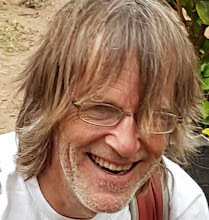
Andersson is a Finland-Swedish author (i.e. a Finn who speaks and writes in Swedish).
Förtvivlan är ett alltför stort ord, men jag vet inte.... Ty sorgen är obotlig, den går aldrig över Därav dess styrka, dess bördighet för det som ännu inte förstörts inne i oss Den som inte har sorgen har intet Den som inte har sorgen kan ta sig till med vad som helst! Med vem som helst! Den som inte har sorgen har aldrig förlorat någonting, aldrig ägt någonting Smärtan och försoningen finns inte hos den som aldrig haft sorgen Och dikten växer bara ur sorgen, ur den sorg som beretts ett rum i glädjens hjuls nav och där klarnat till blick och förståelse. (Ur "Under"- 1984)




_Finland.jpg)